
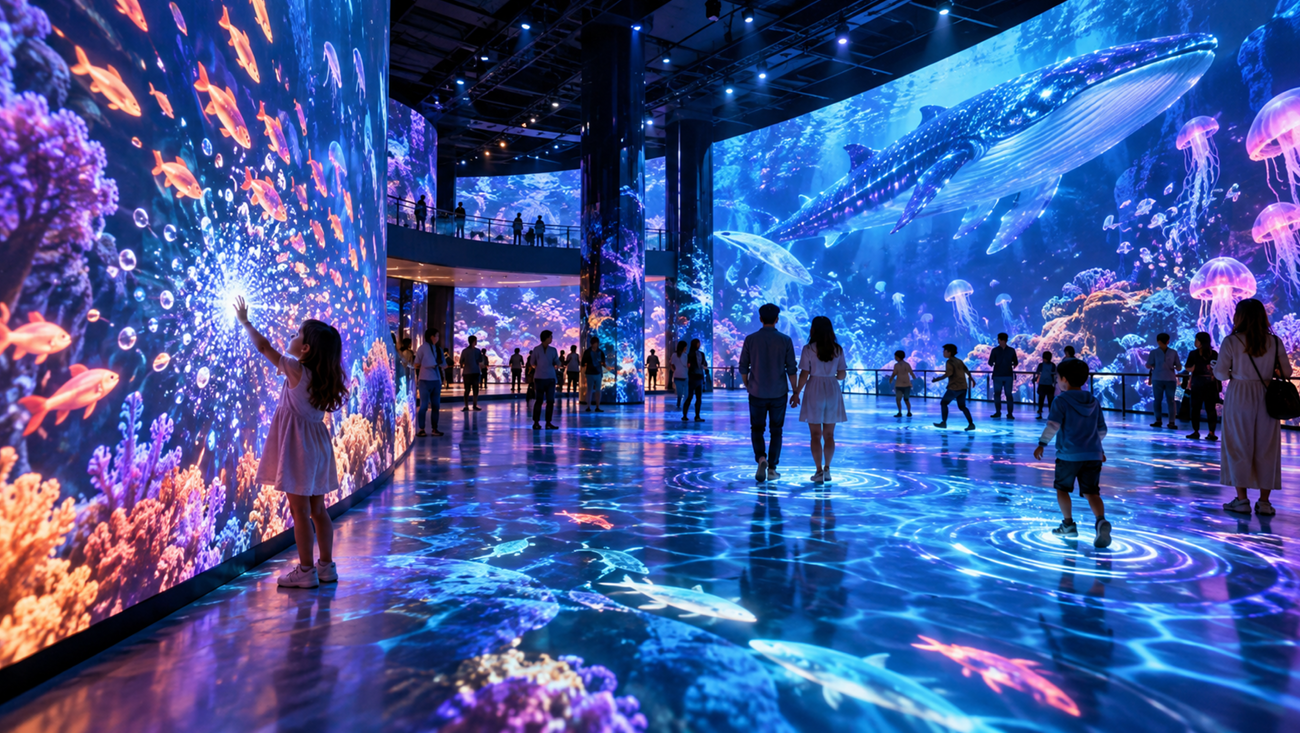
The entertainment sector is evolving dramatically. Modern audiences can no longer get captured by conventional rides and passive attractions. As opposed to just visual entertainment, today's consumers expect memorable, interactive, and engaging experiences. Interactive and immersive zones are currently developing as the entertainment of the future given this evolution in how consumers act. Businesses invest in immersive solutions to stay competitive, boost foot traffic, and optimize profits, from family entertainment centers to amusement parks and retail centers.
What Are Interactive & Immersive Zones?
Interactive and immersive zones are technology-driven entertainment spaces designed to fully engage users. These zones combine digital innovation with physical interaction to create a multi-sensory experience.
They often include:
● Projection-based interactive games
● Augmented Reality (AR) and Virtual Reality (VR)
● Motion-sensing environments
● Gamified digital walls and floors
● 360-degree immersive experiences
Unlike traditional attractions, these zones encourage visitors to become part of the experience, making entertainment more dynamic and memorable.
The Shift in Consumer Expectations
Modern audiences, especially Gen Z and millennials, expect more than just passive entertainment. They want:
● Personalization
● Engagement
● Shareable moments
● Unique experiences
Social media platforms have also played a major role in this shift. Visitors now prefer attractions that are visually appealing and interactive, allowing them to create content and share it online. This has made immersive zones a powerful tool for both entertainment and marketing.
Key Reasons Interactive & Immersive Zones Are the Future
1. Higher Engagement Levels
Interactive zones keep visitors actively involved, increasing their time spent at your venue. The longer visitors stay, the more they spend on tickets, food, and additional experiences.
2. Strong Revenue Generation
These zones are designed not just for entertainment but for profitability. Businesses can generate revenue through:
● Entry tickets
● Group bookings and events
● Corporate experiences
● Brand partnerships
Compared to traditional rides, immersive attractions offer multiple monetization opportunities.
3. Social Media-Driven Growth
Interactive zones are naturally “Instagram-worthy.” Their visual appeal encourages visitors to share photos and videos online, resulting in:
● Free organic promotion
● Increased brand visibility
● Higher footfall
This makes immersive entertainment a powerful marketing asset.
4. Easy Content Updates
One of the biggest advantages of immersive zones is flexibility. Unlike mechanical rides, digital content can be easily updated with new themes, games, or experiences. This keeps the attraction fresh and encourages repeat visits.
5. Ideal for Indoor Entertainment
With the rise of mall-based entertainment and urban space limitations, indoor attractions are gaining popularity. Interactive zones are perfect because they:
● Require less physical space
● Operate year-round
● Are not affected by weather conditions
This makes them a reliable and scalable investment.
6. Appeals to All Age Groups
Interactive and immersive zones are versatile and cater to:
● Children
● Teenagers
● Adults
● Corporate groups
This wide audience reach ensures consistent footfall and revenue generation. Industry Trends Supporting Growth The global entertainment industry is moving towards experience-driven models. Key trends include:
● Digital transformation in entertainment
● Gamification of real-world experiences
● Increased demand for AR/VR-based attractions
● Growth of indoor entertainment centers
Interactive and immersive zones align perfectly with these trends, making them a future-proof investment.
Why Businesses Are Investing in Immersive Zones
Amusement park owners, mall developers, and entertainment entrepreneurs are rapidly adopting immersive solutions because they:
● Differentiate their offerings
● Attract modern audiences
● Increase customer retention
● Deliver faster return on investment
In a competitive market, offering unique experiences is the key to success. Applications Across Industries Interactive and immersive zones are not limited to amusement parks. They are widely used in:
● Shopping malls
● Family entertainment centers (FECs)
● Theme parks
● Museums and exhibitions
● Event spaces
Their adaptability makes them suitable for various business models. Competitive Advantage for Early Adopters Businesses that invest in immersive entertainment early gain a significant advantage:
● Strong market positioning
● Increased brand value
● Higher customer satisfaction
● Better long-term profitability
As demand continues to grow, early adopters will dominate the market. The Future of Entertainment The future of entertainment lies in blending technology with real-world interaction. Innovations such as AI-driven personalization, advanced projection mapping, and mixed reality
experiences will further enhance immersive zones. In the coming years, entertainment spaces will evolve into fully interactive environments
where every visitor experience is unique and customizable.
Conclusion
Interactive and immersive zones are no longer just an emerging trend—they are the future of the entertainment industry. They offer higher engagement, better revenue opportunities, and unmatched customer experiences. For businesses looking to grow in the amusement and entertainment sector, investing in immersive solutions is not just an option—it is a necessity.